Increasing event attendance through personalized connections
6 Weeks
Solo Project
End to End UX Design Process
Mobile Application
Problem
Problem
People are RSVPing to events but not showing up
People are RSVPing to events but not showing up
A startup company launched a social product that helps people meet new friends. Their business team identified a problem in that, on average, 20% of people who RSVP for an event actually end up going. They sought a designer to come up with a feature to add so that the number of attendees who commit to going is more closely aligned with the number of actual attendees.
A startup company launched a social product that helps people meet new friends. Their business team identified a problem in that, on average, 20% of people who RSVP for an event actually end up going. They sought a designer to come up with a feature to add so that the number of attendees who commit to going is more closely aligned with the number of actual attendees.
Solution
Solution
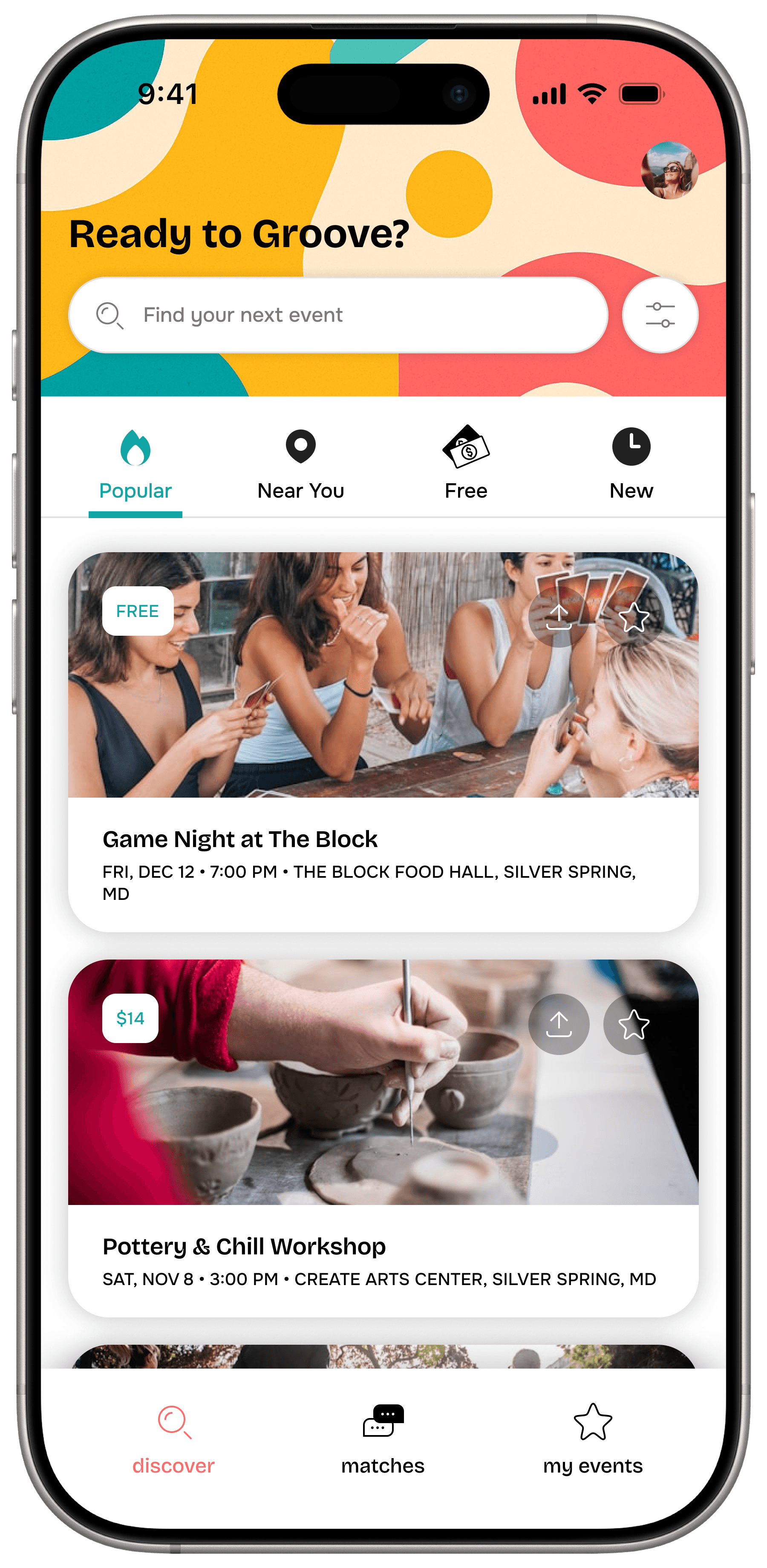
Pre-event engagement incentivizes users
Pre-event engagement incentivizes users
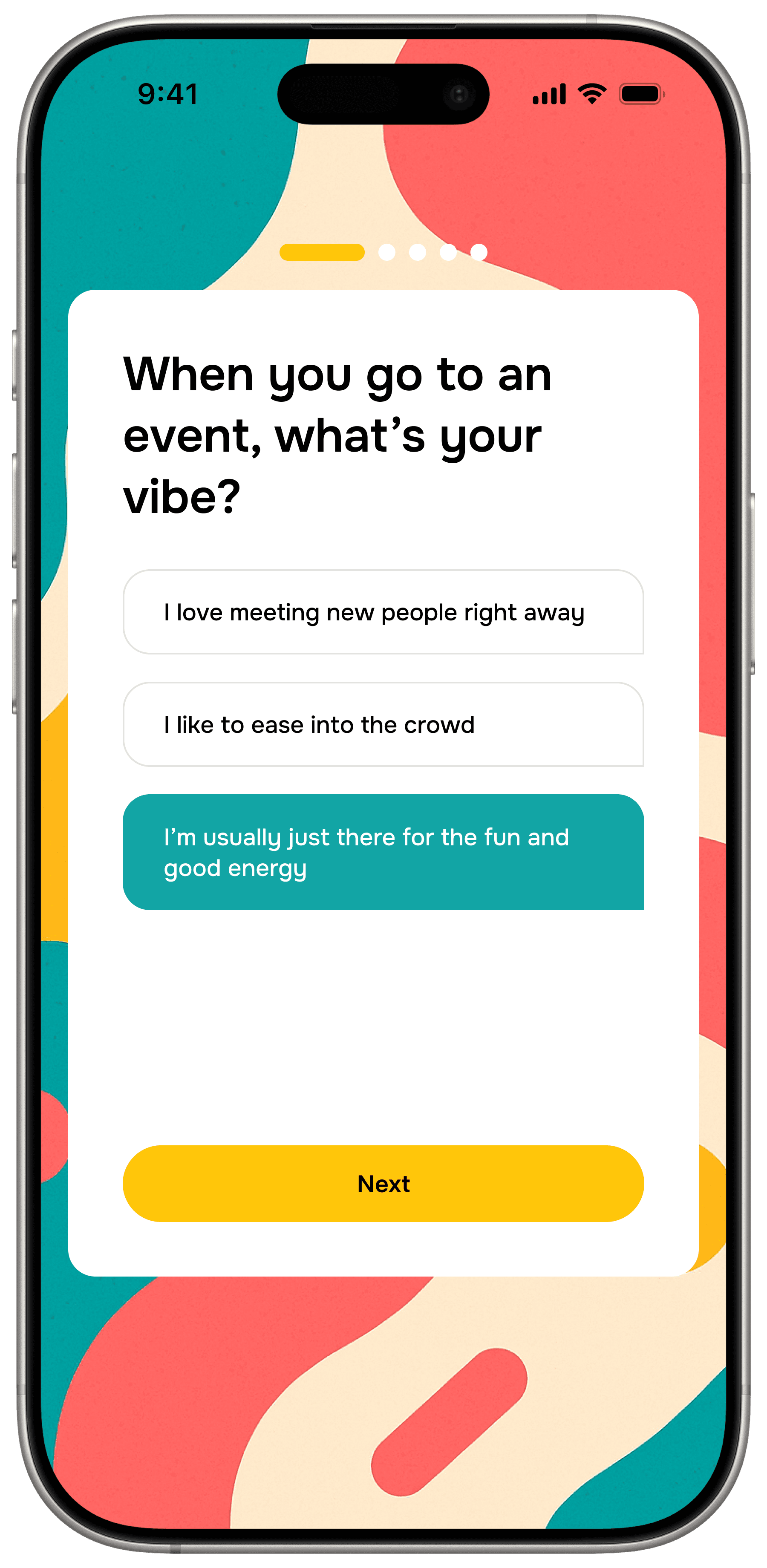
Match Solo Attendees Through Personality-Based Questions
Addresses the biggest attendance barrier: going alone
Creates pre-event commitment
Increases confidence in the experience
Addresses the biggest attendance barrier: going alone
Creates pre-event commitment
Increases confidence in the experience
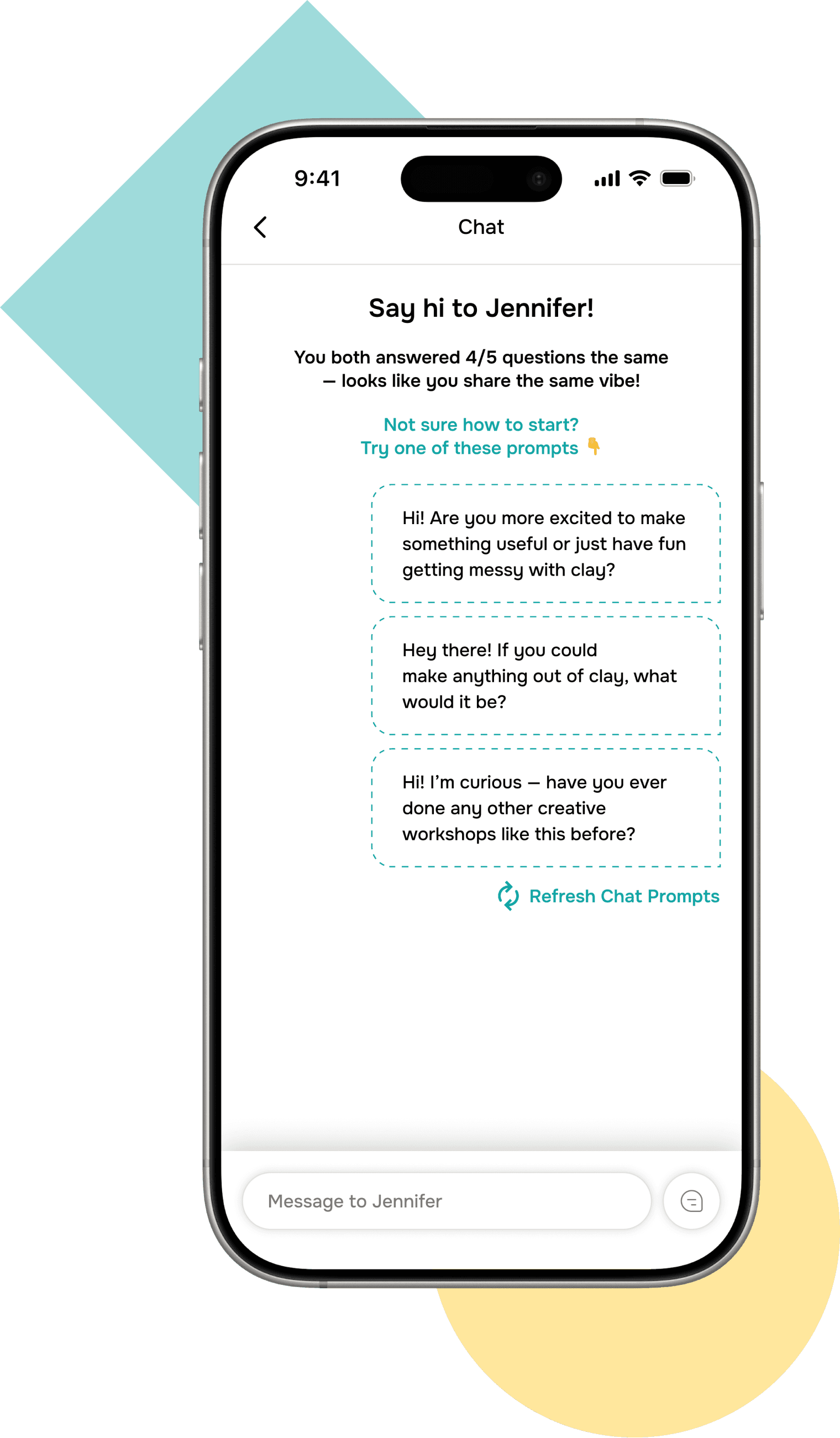
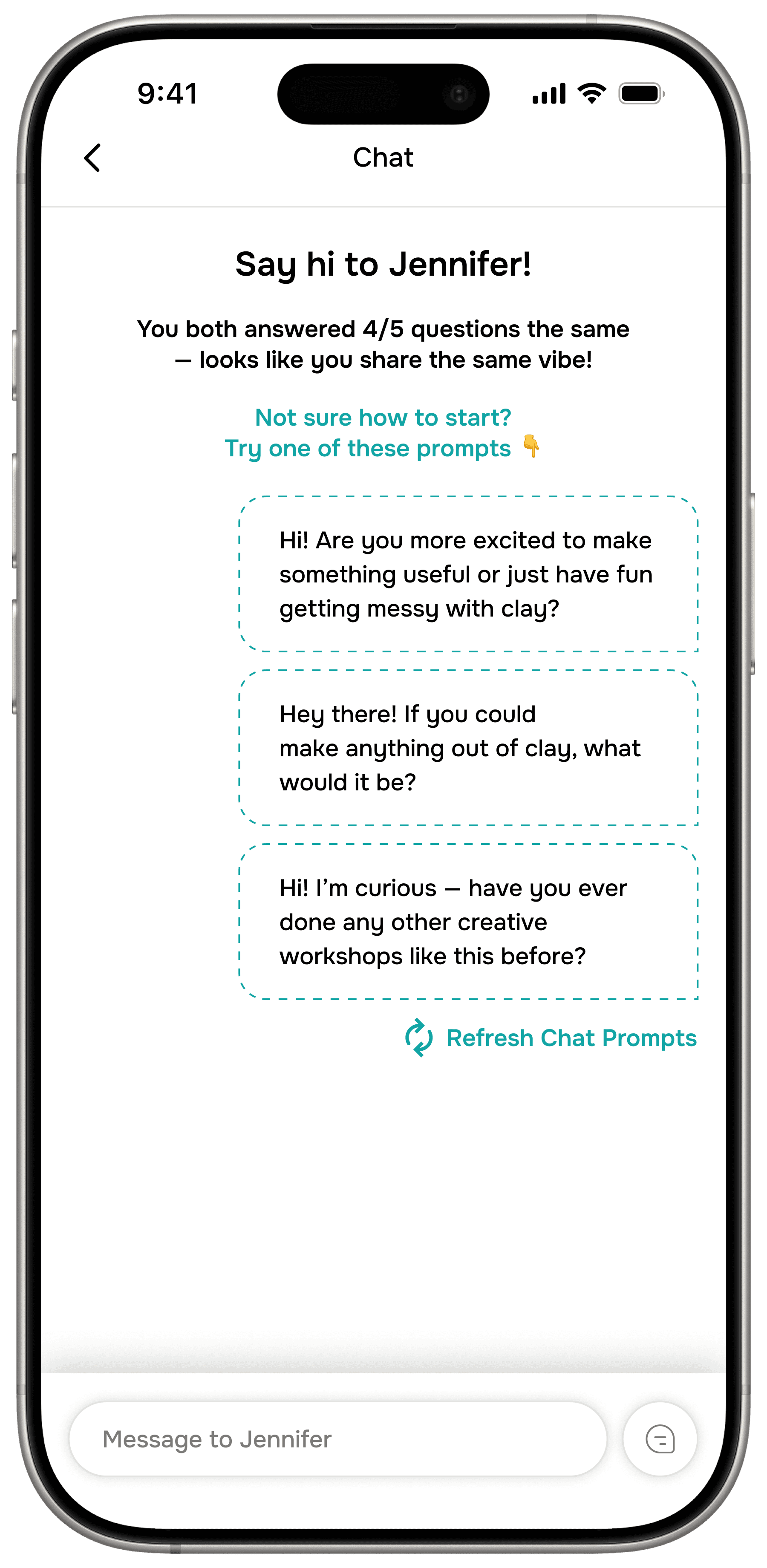
Chat Feature With Pre-Populated First Messages
Reduces social initiation anxiety
Encourages pre-event engagement
Turns passive interest into action
Reduces social initiation anxiety
Encourages pre-event engagement
Turns passive interest into action
Improved Event Discovery
Solves awareness and relevance issues
Personalized discovery increases engagement by ~60% compared to non-personalized feeds (event marketing research).
Reduces decision fatigue
Solves awareness and relevance issues
Personalized discovery increases engagement by ~60% compared to non-personalized feeds (event marketing research).
Reduces decision fatigue
Research
Research
Understanding Why People Aren’t Attending In-Person Events
Understanding Why People Aren’t Attending In-Person Events
Questionnaire + Competitive Analysis
Questionnaire + Competitive Analysis
To better understand the experiences users have attending events, and to challenge my own assumptions, I collected qualitative data through a 10-question Google Form questionnaire.
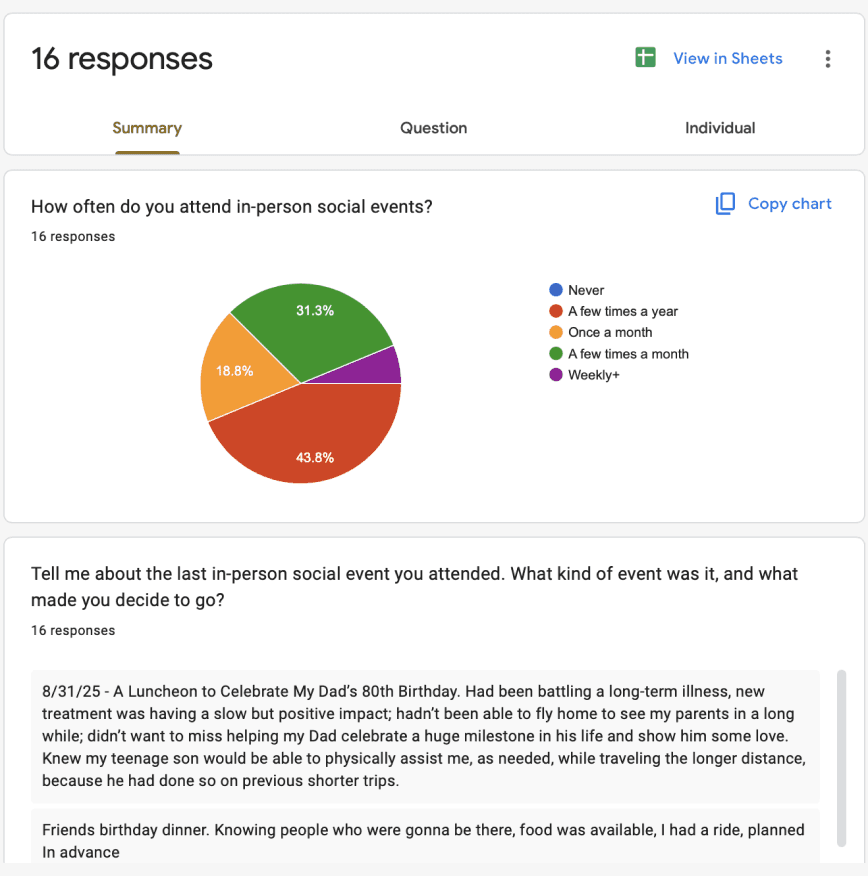
I also studied industry leaders like Eventbrite, Meetup, and Facebook Groups to get a sense of what they were doing to solve similar problems, see what had success, what could use improvement, and what might be missing altogether.
I also studied industry leaders like Eventbrite, Meetup, and Facebook Groups to get a sense of what they were doing to solve similar problems, see what had success, what could use improvement, and what might be missing altogether.



Through studying these leaders, I discovered:
Incentives spike interest in events
Having a social network helps users feel less alone when signing up for events
Confirmation of actions surrounding events is crucial to ensure users know what is happening and when
Through studying these leaders, I discovered:
Incentives spike interest in events
Having a social network helps users feel less alone when signing up for events
Confirmation of actions surrounding events is crucial to ensure users know what is happening and when
Analysis (Affinity Mapping)
Analysis (Affinity Mapping)
After collecting 80+ data points, I categorized them into 5 major themes using the affinity mapping technique, to inform my ideation process.
After collecting 80+ data points, I categorized them into 5 major themes using the affinity mapping technique, to inform my ideation process.
Major Insights
Theme 1: Familiarity and Comfort
Knowing someone or what to expect boosts confidence.
Some users noted they would like an itinerary for an event so they know what to expect.
This information would help ease anxiety around an unfamiliar event.
Knowing someone or what to expect boosts confidence.
Some users noted they would like an itinerary for an event so they know what to expect.
This information would help ease anxiety around an unfamiliar event.
Theme 2: Convenience and Logistics
Easy access, short commute, and simple planning increase attendance.
Users want to know the 5 W’s: who, what, when, where, why and how for every event.
This information helps them plan accordingly which eases anxiety around attending events.
Easy access, short commute, and simple planning increase attendance.
Users want to know the 5 W’s: who, what, when, where, why and how for every event.
This information helps them plan accordingly which eases anxiety around attending events.
Theme 3: Emotional State
Mood, energy, and anxiety strongly affect decisions.
Mood determining attendance can be affected by factors within a persons life, or by advertisements for an event.
Users expressed quality marketing of events being a reason why they are more likely to attend.
Mood, energy, and anxiety strongly affect decisions.
Mood determining attendance can be affected by factors within a persons life, or by advertisements for an event.
Users expressed quality marketing of events being a reason why they are more likely to attend.
Theme 4: Connection and Belonging
People crave genuine human interaction and shared experiences.
Many users credited friends as to why they attend social events.
Users want to feel accepted when they enter a new and unfamiliar event space, and friends help with the transition.
Theme 5: Discovery Challenges
People need a streamlined, trustworthy way to find events.
Users felt it was difficult to find events that met their wants and needs such as like-minded community, fun activities, or local events.
People need a streamlined, trustworthy way to find events.
Users felt it was difficult to find events that met their wants and needs such as like-minded community, fun activities, or local events.
Insights
Insights
Users want to feel accepted when they enter a new and unfamiliar event space.
Overall, I discovered people want attending events to feel effortless, informed, and energizing rather than stressful or uncertain. These insights suggest design opportunities around improving event discovery, reducing friction in planning, increasing transparency between event hosts and attendees, and creating feelings of social safety and motivation.
Overall, I discovered people want attending events to feel effortless, informed, and energizing rather than stressful or uncertain. These insights suggest design opportunities around improving event discovery, reducing friction in planning, increasing transparency between event hosts and attendees, and creating feelings of social safety and motivation.
How might we...
help people who have recently moved to a new city overcome fear and social anxiety and build community?
help people who have recently moved to a new city overcome fear and social anxiety and build community?
Design
Design
Knowing what we know now, how can we solve the problem?
Knowing what we know now, how can we solve the problem?
After identifying the why behind the problem, I could move into the how of solving it. I came up with many solutions and ranked them using a Now, Wow!, How? scale.
After identifying the why behind the problem, I could move into the how of solving it. I came up with many solutions and ranked them using a Now, Wow!, How? scale.
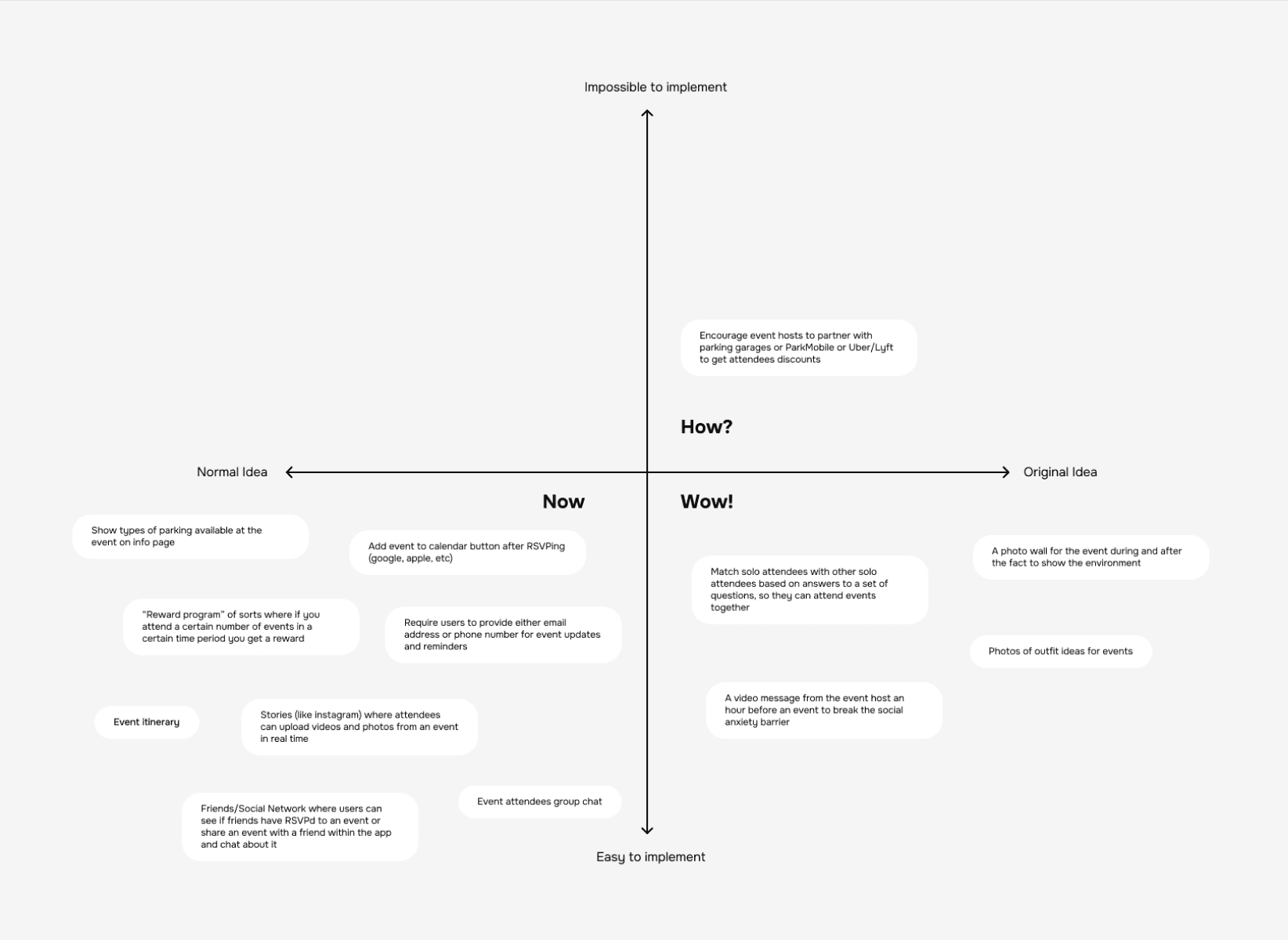
In order to choose the best idea, I compared the business goals to the user goals to see what was common between the two.
In order to choose the best idea, I compared the business goals to the user goals to see what was common between the two.
Business Goal
Increase the conversion of accepted invites to event attendees.
Increase the conversion of accepted invites to event attendees.
User Goals
Connect with people
Experience something new
Attend events with friends
Connect with people
Experience something new
Attend events with friends
Based on the goals, I decided that designing a match feature to pair solo attendees through personality-based questions, so they can attend events together, was the best solution to the problem that could be implemented the fastest.
Based on the goals, I decided that designing a match feature to pair solo attendees through personality-based questions, so they can attend events together, was the best solution to the problem that could be implemented the fastest.
Testing + Iterations
Testing + Iterations
4 Main Improvements
4 Main Improvements
I conducted 3 moderated, guerrilla-style usability tests to validate the design. I needed to see if users understood the purpose of the matching feature and could naturally move to the next step of initiating a chat.
I conducted 3 moderated, guerrilla-style usability tests to validate the design. I needed to see if users understood the purpose of the matching feature and could naturally move to the next step of initiating a chat.
Iteration 1: Clarifying the Matchmaking Experience
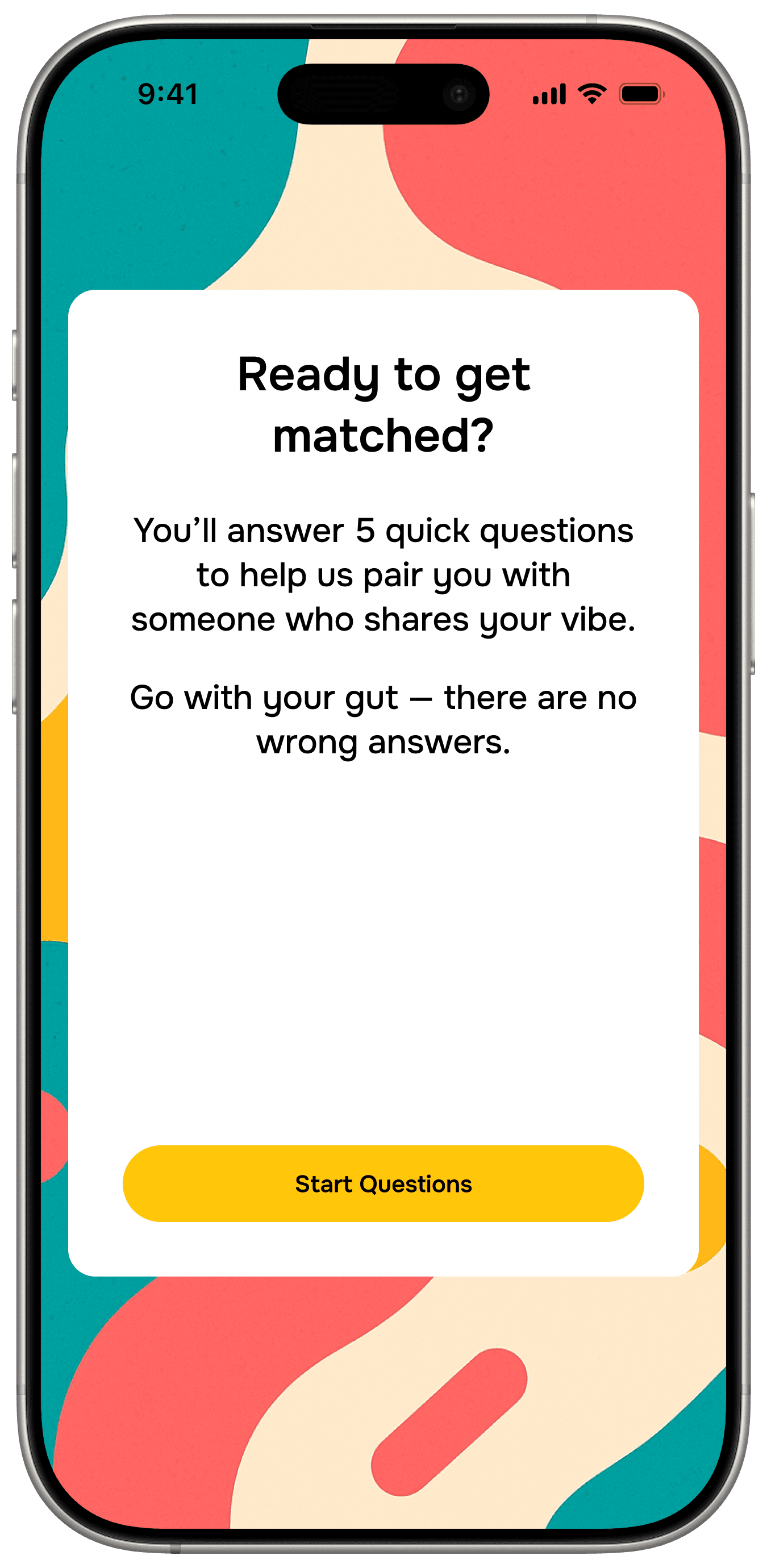
Users did not understand that matchmaking was automatic, which created uncertainty after RSVPing.
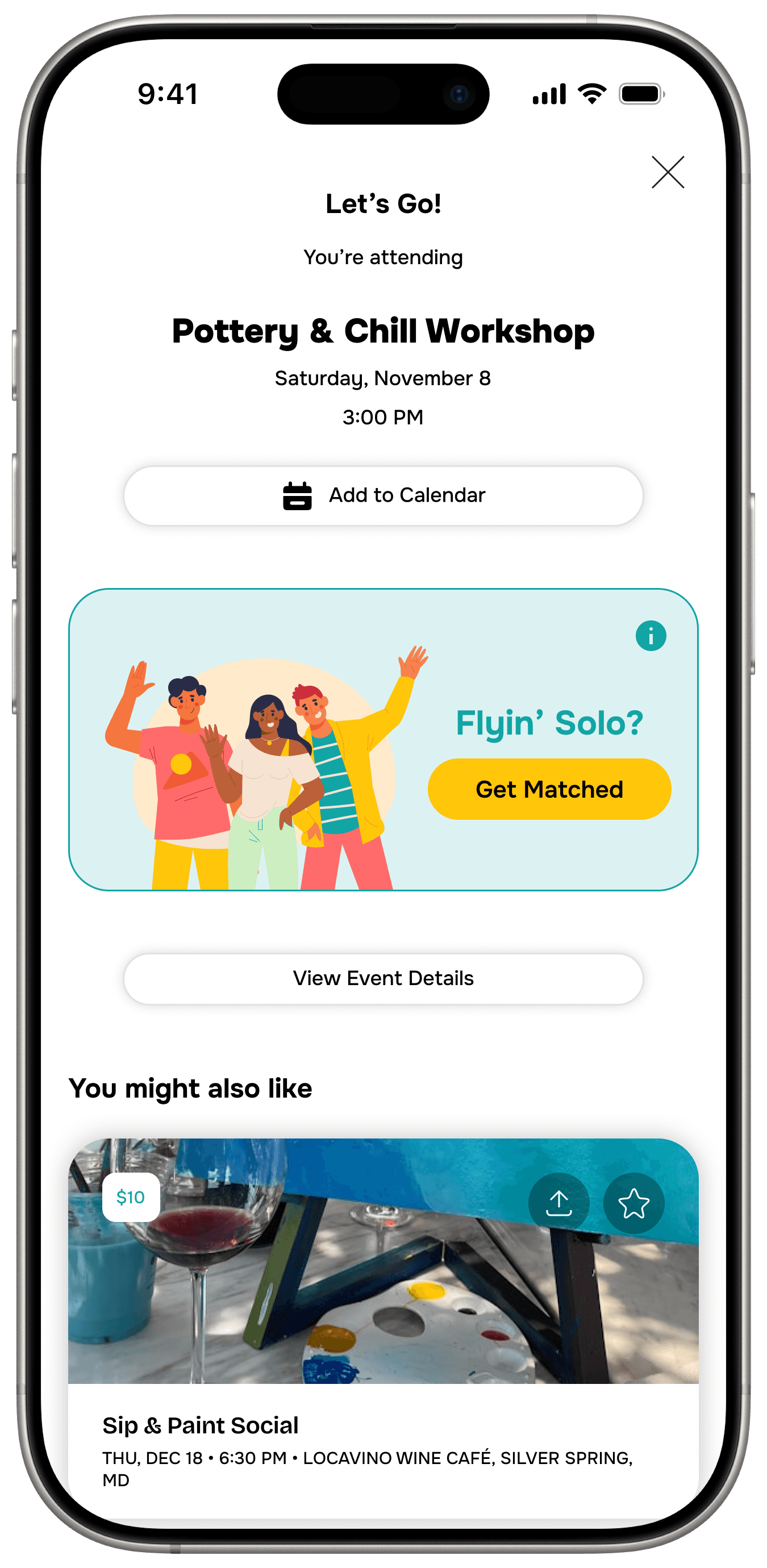
Added clearer explanatory copy and a pre-match onboarding screen to set expectations for how matches are generated and what happens next.
Reduced confusion and drop-off by making the process feel predictable and intentional before users began answering questions.
Users did not understand that matchmaking was automatic, which created uncertainty after RSVPing.
Added clearer explanatory copy and a pre-match onboarding screen to set expectations for how matches are generated and what happens next.
Reduced confusion and drop-off by making the process feel predictable and intentional before users began answering questions.
Iteration 2: Increasing Trust Before Starting a Chat
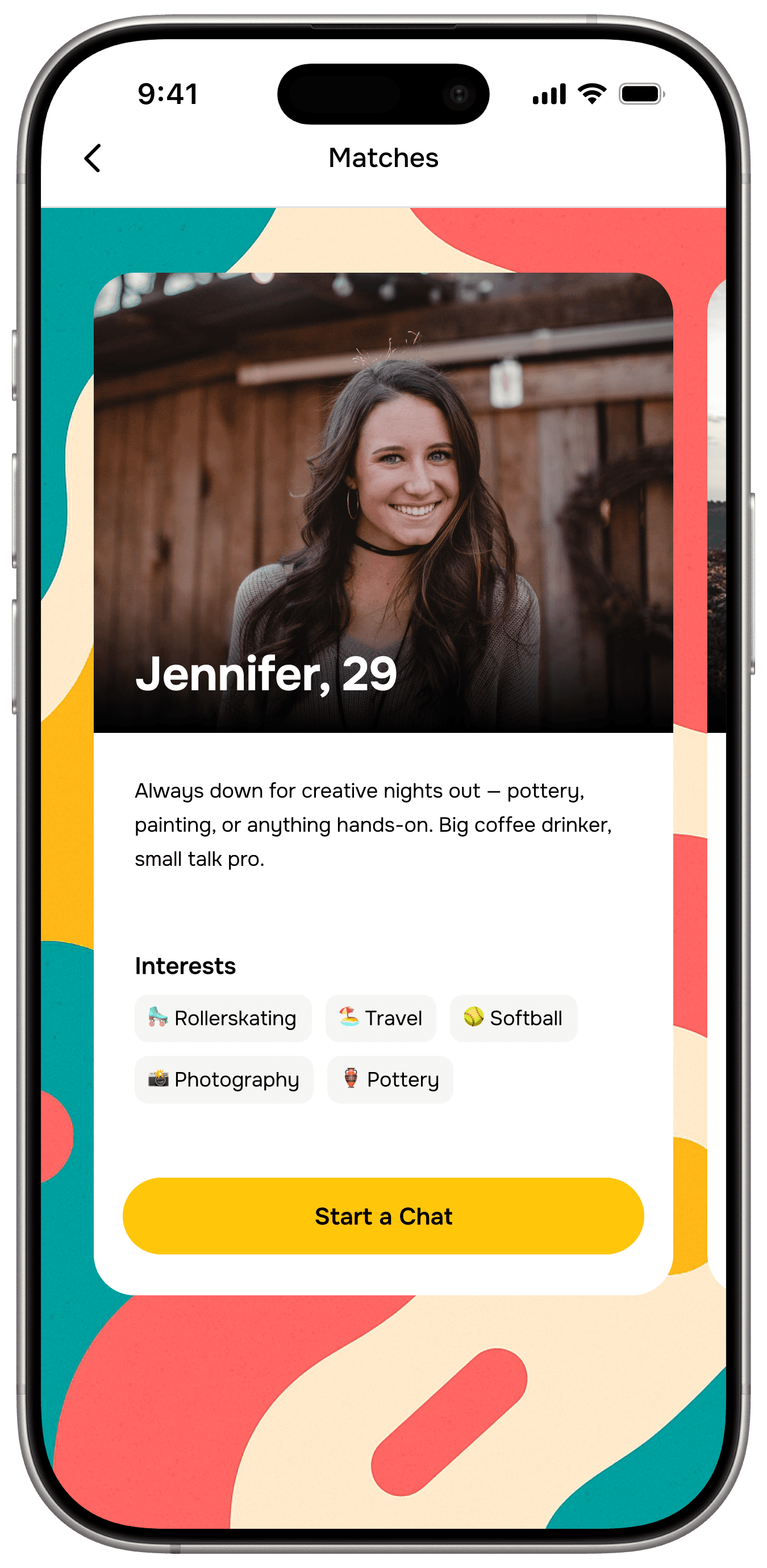
Users hesitated to initiate chats without enough context about who they were matched with, raising safety and comfort concerns.
Redesigned the matches screen with profile cards (photo, name, bio, interests) to provide social proof and transparency.
Users hesitated to initiate chats without enough context about who they were matched with, raising safety and comfort concerns.
Redesigned the matches screen with profile cards (photo, name, bio, interests) to provide social proof and transparency.
Iteration 3: Reducing Chat Initiation Friction
Users struggled with what to say first, causing hesitation even after a successful match.
Introduced pre-populated conversation prompts based on shared answers and common icebreakers.
Lowered social anxiety and increased message initiation, helping users move from matching to active engagement more quickly.
Users struggled with what to say first, causing hesitation even after a successful match.
Introduced pre-populated conversation prompts based on shared answers and common icebreakers.
Lowered social anxiety and increased message initiation, helping users move from matching to active engagement more quickly.
Iteration 4: Improving Question Interaction Clarity
Users were unsure whether answer choices were multi-select, due to inconsistent UI patterns.
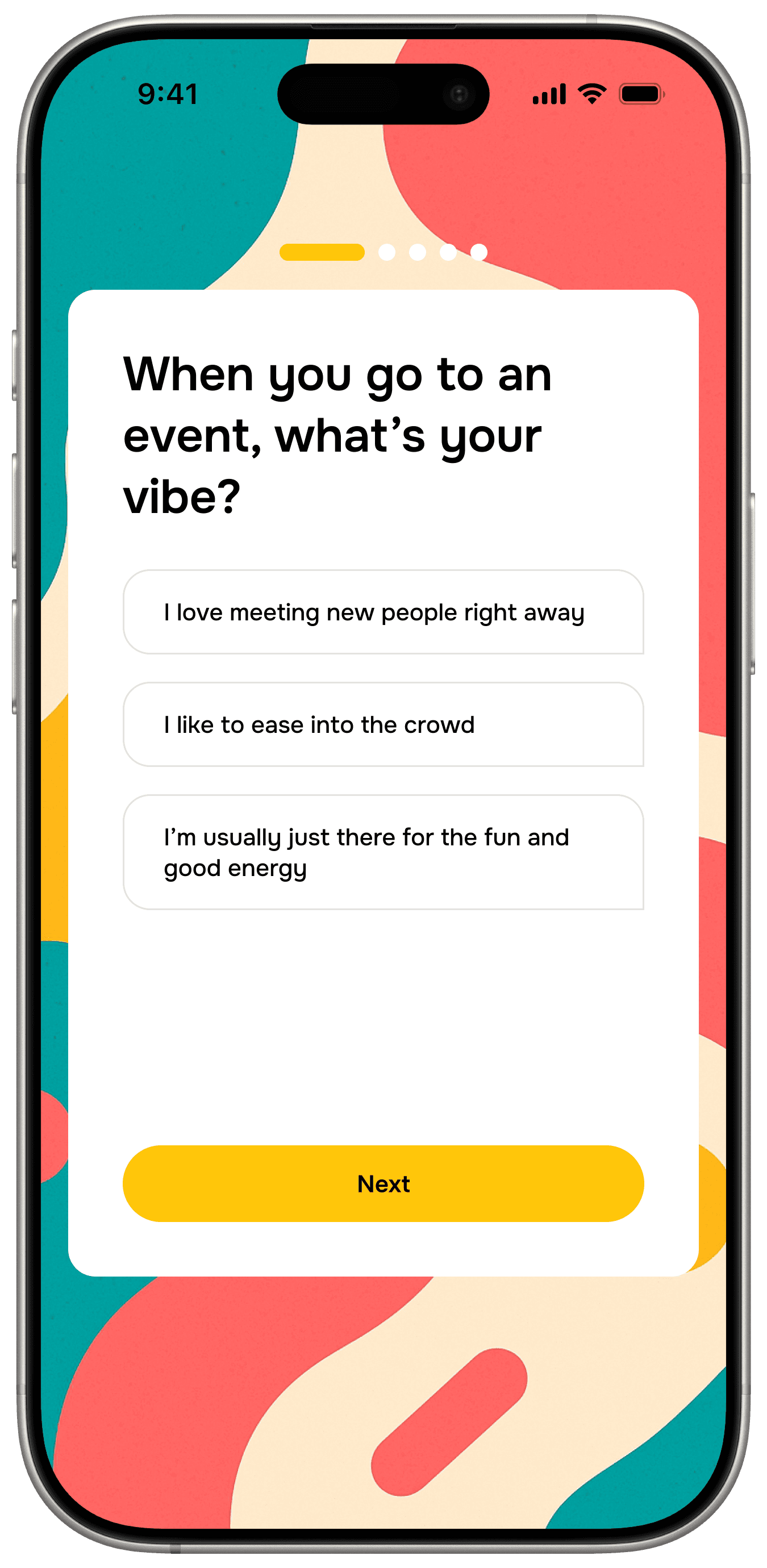
Standardized the visual treatment of selectable options to clearly signal interaction and selection behavior.
Improved completion speed and confidence, reducing friction during the matching flow.
Users were unsure whether answer choices were multi-select, due to inconsistent UI patterns.
Standardized the visual treatment of selectable options to clearly signal interaction and selection behavior.
Improved completion speed and confidence, reducing friction during the matching flow.
The Final Designs
The Final Designs
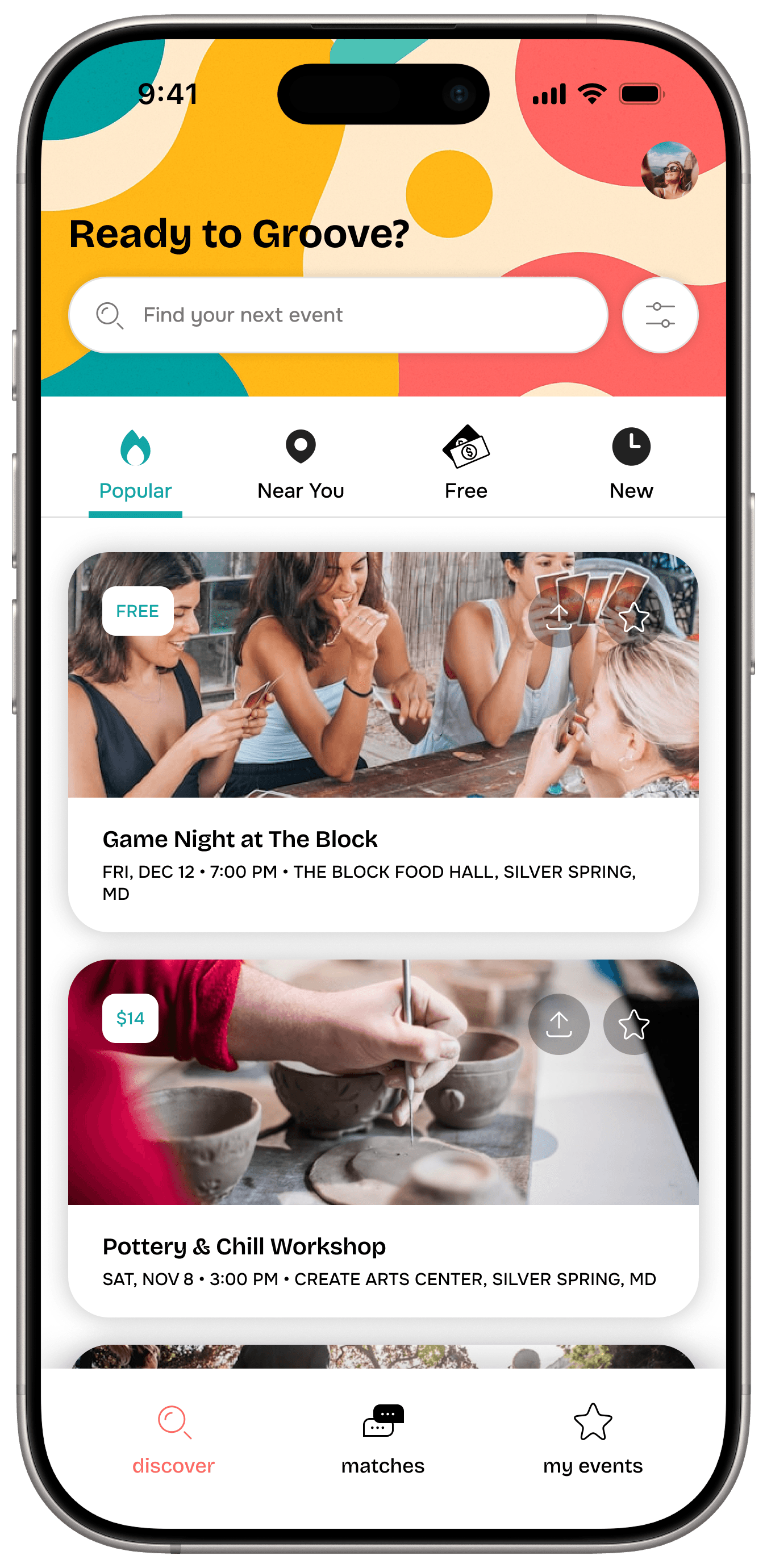
These designs address the key moments where users previously hesitated—before matching, before chatting, and before committing to an event.
These designs address the key moments where users previously hesitated—before matching, before chatting, and before committing to an event.
The Style Guide
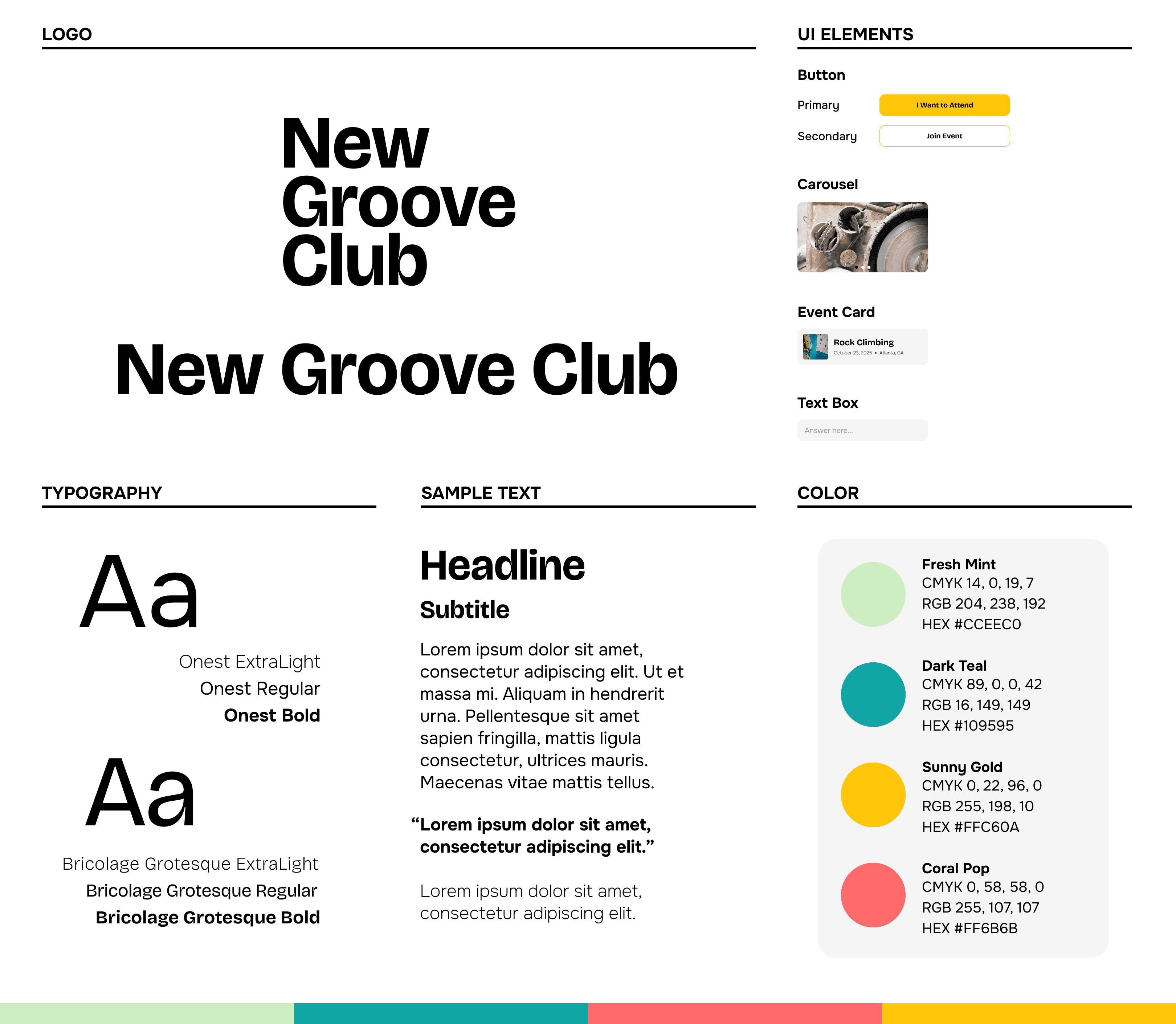
The Style Guide
Reflections
Reflections
I had lots of fun creating this project, and I also learned a lot about what it takes to be a designer who can support both users and the business. Some of the key things I learned include:
Designing for a real product means working within constraints, not around them.
User research is most valuable when it directly informs decisions, not just insights; testing helped me focus on the moments that actually impacted user behavior.
Iteration is about reducing friction, not just refining visuals—small clarity improvements often had the biggest impact on usability and confidence.
Collaboration and adaptability are essential, as designing for a real company requires responding to feedback, constraints, and evolving priorities.
I had lots of fun creating this project, and I also learned a lot about what it takes to be a designer who can support both users and the business. Some of the key things I learned include:
Designing for a real product means working within constraints, not around them.
User research is most valuable when it directly informs decisions, not just insights; testing helped me focus on the moments that actually impacted user behavior.
Iteration is about reducing friction, not just refining visuals—small clarity improvements often had the biggest impact on usability and confidence.
Collaboration and adaptability are essential, as designing for a real company requires responding to feedback, constraints, and evolving priorities.
Next Steps
Next Steps
Pursue the host flow
Pursue the host flow
How do users create an event and choose questions for the matching process?
How do users create an event and choose questions for the matching process?
Explore AI integration
Explore AI integration
How does AI fit into the chat prompt feature?
How does AI fit into the chat prompt feature?
User Onboarding
User Onboarding
During account creation, ideally users would be able to set preferences for the matches they would like to see (i.e. age, gender, race, etc)
During account creation, ideally users would be able to set preferences for the matches they would like to see (i.e. age, gender, race, etc)
Thank You!
Thank You!